

-
Cameron Ferre: Still chasing Top Fuel greatness, just on his own terms
-
Ron Capps thinking big at NAPA Auto Parts NHRA Midwest Nationals
-
Top Fuel’s Shawn Langdon looking for fourth straight win of 2026
-
Behind the Scenes with the winners of the 2026 NHRA Nationals at The Rock
-
Weekend Rewind: The inaugural NHRA Nationals at the Rock
-
-
Five Things We Learned in Rockingham
-
New venues like Rockingham bring excitement for old pro Ron Capps
-
That was then, this is now: The Winston Invitational at Rockingham
-
After a near-miss in Michigan, Ingwersen and crew are more inspired than ever
-
Jordan Vandergriff relishes first opportunity to race at Rockingham Dragway
-
Behind the Scenes with the winners of the 2026 Dodge NHRA Great Lakes Nationals
-
Weekend Rewind: 2026 Dodge NHRA Great Lakes Nationals
-
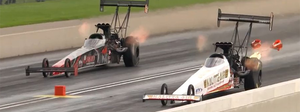
Five things we learned from the Dodge NHRA Great Lakes Nationals presented by Mopar
-
Vandergriff and crew took aim at No. 1 in challenging Michigan conditions
-
Friday Photo Gallery- NHRA makes a monumental return to Michigan
- ad
-
Inaugural Dodge and NHRA Tour de Michigan launches historic race weekend
-
Reigning world champ Dallas Glenn gears up for first Countdown race
-
Stewart, Hagan, Pruett reveal new Dodge Charger Super Bee Purple Haze liveries
-
Behind the Scenes with the winners of the 2026 Cornwell Tools NHRA U.S. Nationals
-
Weekend Rewind: 2026 Cornwell Quality Tools NHRA U.S. Nationals
-
Malcolm Phillips makes his Pro Stock Motorcycle return at Indy
-
No canopy, no problem for Justin Ashley and his crew chiefs
-
Prock Indy three-peat would make U.S. Nationals Funny Car history
-
Howey returns to Indy with his eyes on a Top 10 berth
-
Nataas looks to add to previous Indy success story
- ad
-
Outlaw Street's Paige Coughlin looks to add a Wally to extensive family collection
-
Dallas Glenn counts every point as he looks for regular season Pro Stock championship
-
Jake Sanders’ NHRA Top Fuel debut has been a long time coming
-
Fresh off semifinal finish, Cody Anderson ready for U.S. Nationals debut
-
Ride with Herb McCandless down Indy’s return road
Cameron Ferre: Still chasing Top Fuel greatness, just on his own terms
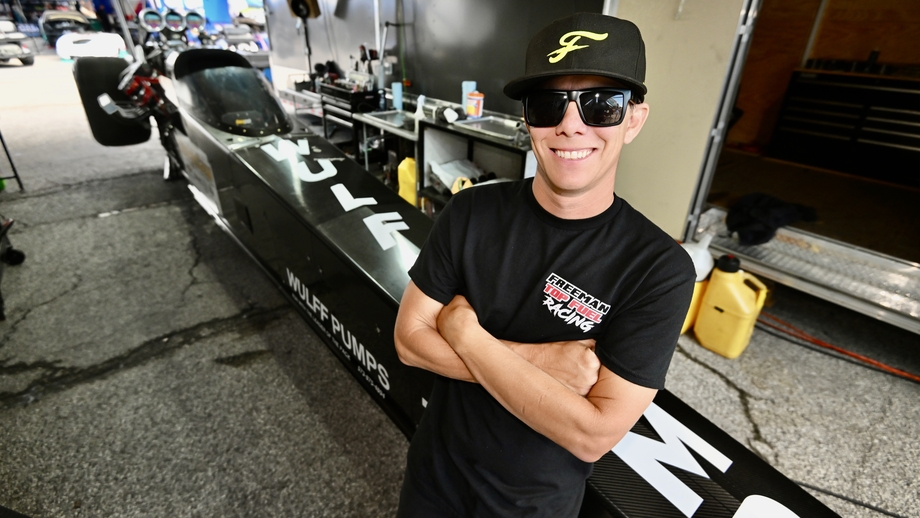
At 41, Cameron Ferre understands the realities of professional drag racing better than he did when his singular ambition was simply to become a Top Fuel driver. He has a family, a career away from the racetrack (and even acting) and an understanding that funding often determines who gets opportunities in professional motorsports.
But put Ferre in a Top Fuel dragster, and none of that has diminished his competitive edge.
“I’m having fun. I’m enjoying my racing, and that’s what I’m trying to do,” Ferre said. “The biggest thing I want to be is a good dad and a good husband. After that, is wherever my racing career takes me.”
Right now, that career has Ferre driving Jerry Freeman’s Top Fuel dragster, a multi-year partnership that was originally supposed to last a single weekend. Freeman is a longtime racer, fabricator and former Top Fuel driver who worked on race teams before eventually building a car for himself. He even fabricated the engine hoist in the team’s pit so he can remove the supercharger and service the car when working alone.
“He builds a lot of this stuff himself,” Ferre said. “He knows what he’s doing. He built that hoist so when he’s by himself, he can service the supercharger himself. He was here Thursday by himself before the crew guys even got here.” Ferre’s involvement on the team began when veteran tuner and racer Johnny West suggested Freeman call him for help getting the program established. Freeman initially intended to drive the Top Fuel car himself.
“He said, ‘I think you’re the guy,’” Ferre recalled. “He said as long as he’s running the car, I’ll be driving it. This was supposed to be a one-weekend thing to help him get some laps under his belt and get his license. Now it’s year number three.”
It is hardly a conventional Top Fuel business model. Freeman does much of the work himself. Ferre lives in California and often takes a red-eye flight after work to make it to a race. What the operation lacks in manpower, however, it makes up for in discipline.
“Jerry does it the right way,” Ferre said. “He’s not going to send it out there with a part that’s questionable. He has the right stuff. He’ll wait if we need to buy the right thing instead of just going out there and nuking the thing every time.” The team has also benefited from assistance and advice from larger operations, and Ferre believes the progress is becoming visible. “People are starting to believe in the program,” he said. Ferre remains equally serious about his own performance. Seat time in the same car has allowed him to refine the details that separate simply driving a Top Fuel dragster from driving one exceptionally well. Brake feel, cockpit position, linkage adjustments and staging depth can all influence reaction time.
“You get more accustomed to it and more acclimated,” Ferre said. “You can start trying to chop down the tree a little bit more because you know what the brakes are going to do. The more seat time, the better you get as a driver.”
A recent matchup with Shawn Langdon offered Ferre a useful measuring stick. Langdon posted a .030 reaction time. Ferre was .031.
“I care about that stuff,” Ferre said. “You go up against Shawn Langdon — he’s the best in the world for a reason. He’s a phenomenal driver and has a phenomenal car. But we also didn’t come to lose.” That competitive standard matters to Ferre because he knows every appearance is also an audition. He remains realistic about how professional motorsports works. Talent matters, but so does money. He increasingly sees a niche for himself helping smaller Top Fuel operations become established. He approaches driving as a profession, not simply as an opportunity to get into a race car.
“I run it like a business,” Ferre said. “If you want my help, I’m more than happy to come help you. There’s a fee. People are willing to do that because they know I take care of their stuff. I drive it like it’s mine.” But that doesn’t mean the larger dream has disappeared.
“If John Force or Tony Stewart called me tomorrow and said, ‘Hey, let’s go,’ obviously I would,” Ferre said. “The dream is still there.” For now, though, Ferre and Freeman are measuring progress differently. One of Freeman’s goals was simply to own a 300-mph Top Fuel time slip. Ferre delivered that recently with a 308-mph run.
“We checked that one off the list,” Ferre said. Next is making consistent 3.80-second runs. From there, the goal is straightforward: give themselves a legitimate chance on Sunday.
“If we can consistently go 80s, you never know what can happen,” Ferre said. “Maybe we can sneak in a round win. That would be awesome.”
Away from the racetrack, Ferre has also entered an unexpected new chapter. After leaving Racepak data acquisition, he became a college professor teaching auto collision at Cerritos College. His students occasionally discover that the person teaching their class also spends weekends strapped into an 12,000-horsepower Top Fuel dragster.
“They do a little Google search and they’re like, ‘Wait a minute,’” Ferre said with a laugh. It is an unusual combination, but it fits the evolution of Ferre’s career.
He’s a professor, husband and father whose family races, too. His son competes seriously in motocross, and racing remains part of the family’s life. He’s also still a professional Top Fuel driver who cares whether his reaction time is one thousandth of a second slower than one of the best drivers in the sport. And he has found an equally determined partner in Freeman.
“Jerry puts his heart and soul into this car,” Ferre said. “People don’t understand what it takes to run a fuel car, let alone pretty much by yourself. He’s a working-class guy who said, ‘I’m going Top Fuel racing and nobody’s going to stop me.’
“I kind of had that mentality when I was younger: ‘I’m going to drive a Top Fuel car and nobody’s going to stop me.’
“And here I am.
“Destiny kind of put us together.”