

-
Gadson’s Big Brothers Big Sisters mission makes an impact at Texas Motorplex
-
Behind the Scenes with the winners of the 2026 Texas NHRA FallNationals
-
NHRA brings 2026 SEMA Show to the world with streaming interviews all week
-
NHRA Mission Foods Awards Ceremony returns to Pechanga Resort Casino
-
Weekend Rewind: 2026 Texas NHRA FallNationals
-
-
J.R. Todd and Matt Smith tell tales of Texas triumph
-
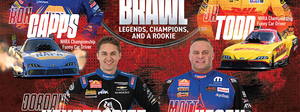
NHRA Breakfast at 2026 SEMA Show focuses on epic Funny Car championship battle
-
Aaron Stanfield completes Top Fuel licensing runs at Texas Motorplex test
-
Five Things We Learned at the Texas NHRA FallNationals
-
Brown, Todd, Glenn, Smith collect huge Texas NHRA FallNationals victories
-
Unofficial Mission Foods points standings
-
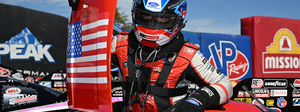
Texas NHRA FallNationals Sunday photo gallery
-
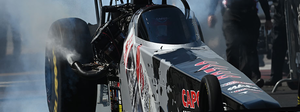
Sunday News and Notes from the Texas NHRA FallNationals
-
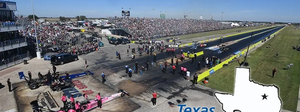
Texas NHRA FallNationals Sunday preview
-
Glenn sets Pro Stock record; Langdon, Beckman, and Herrera qualify No. 1
- ad
-
Texas NHRA FallNationals Saturday photo gallery
-
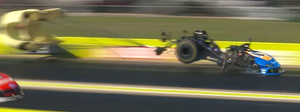
Ron Capps rides out wild blower explosion at Texas NHRA FallNationals
-
Saturday News and Notes from the Texas NHRA FallNationals
-
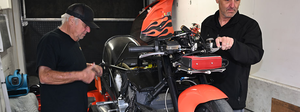
After fourteen years, GT Tonglet returns to Pro Stock Motorcycle
-
RAD Torque Systems to back Joey Gladstone for full 2027 season aboard MSR Buell

-
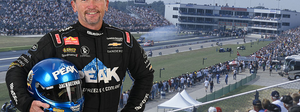
Forty years later, Beckman has gone from fan to leading the Funny Car field in Dallas
-
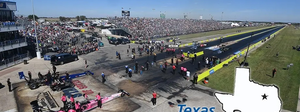
Texas NHRA FallNationals Saturday preview
-
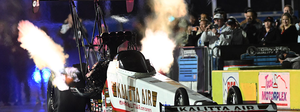
Langdon, Beckman, G. Stanfield, Herrera wrangle provisional No. 1 spots in Dallas
-
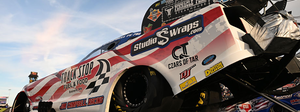
Texas NHRA FallNationals Friday photo gallery
-
First look at 2027 Pro Stock combination in Dallas exhibition passes
- ad
-
Friday News and Notes from the Texas NHRA FallNationals
-
Langdon riding a four-race, 16-round win streak into Countdown's second half
-
A galaxy of NHRA superstars shined at annual FallNationals Pre-Stage FanFest
-
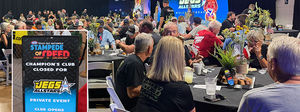
JEGS Allstars feted at pre-event breakfast at Texas NHRA FallNationals
-
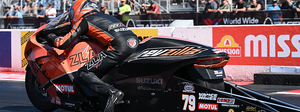
Gaige Herrera eyes Pro Stock Motorcycle championship opportunity in Dallas
Local Congresswoman Norma J. Torres salutes NHRA and its Pomona roots
Congresswoman Norma J. Torres (CA-35), a lifelong resident of Pomona, Calif., was an honored guest of NHRA at the Lucas Oil NHRA Winternationals.
The congresswoman brought with her a copy of the Congressional Record to be read on the floor of Congress and entered into the congressional record saluting NHRA on its 75th anniversary.
The item reads:
Mr. Speaker, I rise today to honor the National Hot Rod Association as it celebrates its 75th anniversary.
In 1951, a letter in the Hot Rod magazine by Wally Parks urged hot rodders to unite, leading to the establishment of the National Hot Rod Association (NHRA). Its mission was founded on the principles of bringing hot rodders together, promoting safety, and allowing racers to compete without creating safety concerns on public streets.
In just a year, the NHRA grew to 7,000 members. The organization worked with local authorities to set national standards for drag racing. The very first NHRA event was held in 1953, in my hometown of Pomona, California.
I am proud that for the past 75 years, the Pomona Dragstrip has remained a historic venue for drag racing and national NHRA events. After its establishment, NHRA continued to grow, sanctioning more than 100 racetracks across 38 states by 1957. As NHRA expanded, newspapers credited its focus on safe, organized racing, and the 1957 Nationals drew more than 450 entries. By the end of the 1950s, the NHRA was no longer recognized as a movement, but instead as a motorsports institution.
In 1961, the NHRA expanded beyond one annual national event by adding the Winternationals race, and adding the Nationals race to the Indianapolis Raceway Park. Winternationals has been hosted by the Pomona Dragstrip since that time. In 1965, World Finals began to air on television, growing the sport’s popularity beyond the U.S., and into England and Europe, and allowing it to secure membership in the Federation Internationale de l’Automobile (FIA) and the Automobile Competition Committee of the United States (ACCUS).
Under the leadership of founder Wally Parks, the NHRA increased its annual events, year after year, until its schedule grew to 10 events by the end of the 1970s. Venues were developed throughout North America, enhancing its ability to host new events each year. The 1970s were marked by increased media coverage, corporate support, and on-track innovation, allowing for a more diverse, professional, and mainstream audience for the NHRA.
Even though the NHRA’s first race was in Pomona and it later on moved elsewhere, premier motorsports could not stay away from the Inland Empire for long: in 1980, World Finals were at the Ontario Motor Speedway, and in 1984, the NHRA World Finals moved back to Pomona, which has hosted this prestigious event, with one exception, since that time. Throughout the 1990s, motorsports continued to break more barriers by growing its online presence, developing multi-million dollar sponsorships, and hitting record speeds on the track. In the new millennium, the NHRA continued to work with multi-million dollar sponsors, partnering up with companies such as Powerade, ESPN, and Coca-Cola.
By the 2010s, NHRA’s leadership continued the legacy of Wally Parks’ founding mission, and focused on incorporating new safety and technology. NHRA partnered with FOX Sports in 2015, allowing the organization to air four-wide racing on national television. Just last year, both men and women set record-high speeds, showing that the sport continues to innovate and grow.
NHRA’s impact is widespread: its focus on motorsports safety, vehicle standards, modernized rules, and continuously updated protocols that ensure the protection of drivers, teams, and fans, remains unparalleled. For the past 75 years, NHRA has been a driving force in American motorsports and car culture, ensuring it will continue to flourish for the coming decades.
For its remarkable legacy of innovation and growth, and key role in public safety, competition, and community, it is my honor to recognize the 75th anniversary of the National Hot Rod Association. Its deep roots in the Inland Empire and widespread popularity is worthy of the highest commendation.
Congresswoman Torres lives in Pomona with her hot rod-loving family, husband, Louis, and their two sons, Robert and Matthew. Her third son, Christopher, is a distinguished Air Force veteran and current law enforcement officer.